

News
Mobrilz
February 25, 2026
6:30 AM
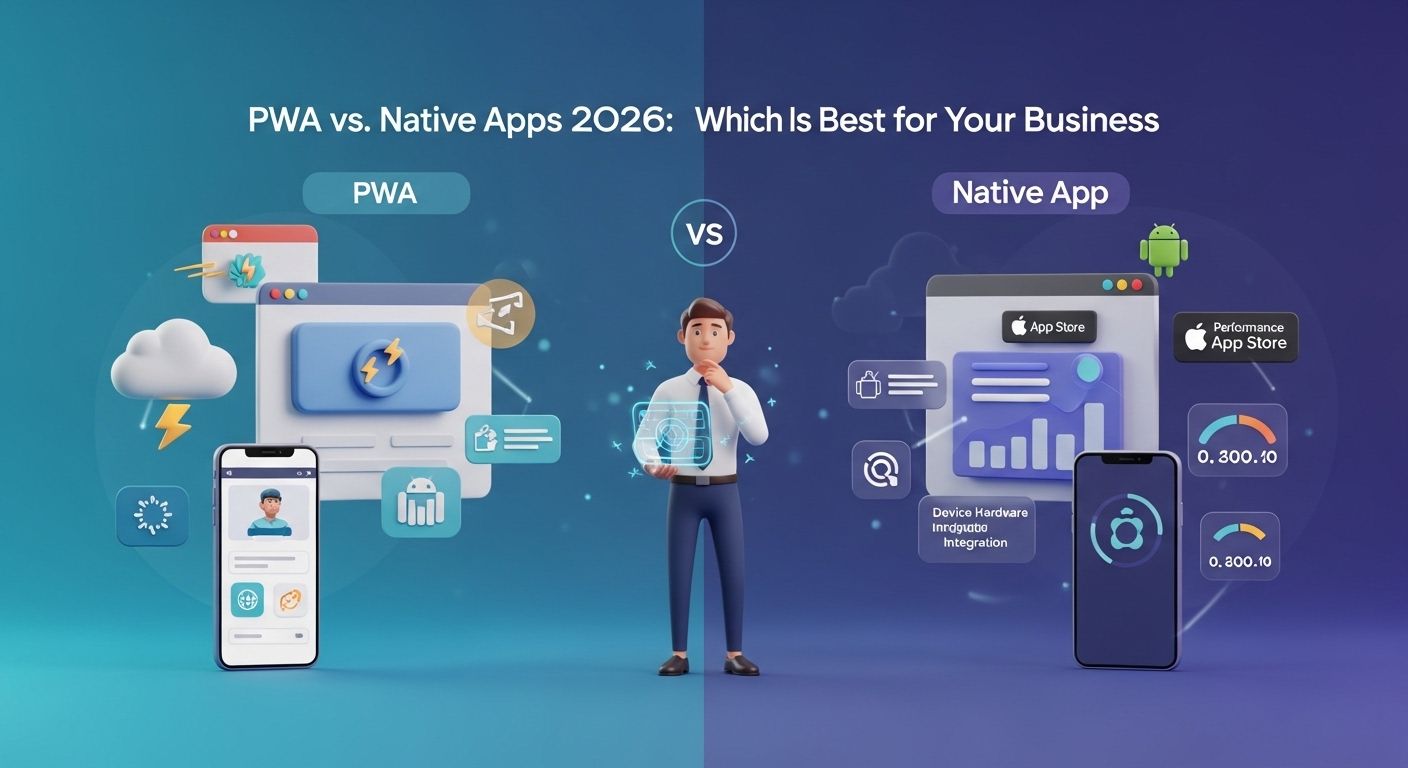
If you’re running a business in 2026, you already know the stakes. The digital marketplace isn't just crowded; it’s loud. Whether you’re a startup founder in Bangalore or a retail giant in New York, your mobile strategy is basically your lifeline to your customers. But here’s the million-dollar question: Should you go with a Native App or a Progressive Web App (PWA)?
If you’ve been hunting for professional app development services, you’ve likely heard a dozen different opinions. Let’s cut through the noise and look at what actually moves the needle for your bottom line this year.
Think of a Native App like a custom-built home. It’s designed specifically for one foundation—either iOS or Android. You have to "move in" by downloading it from an app store. It’s powerful, it’s fast, and it has full access to the phone's hardware.
A Progressive Web App (PWA) is more like a high-end, modular pop-up. It lives on the web but feels exactly like a downloaded app. You don’t need an app store; you just "add to home screen." In 2026, these have become so smooth that most users can’t even tell they aren’t "real" apps. Many companies providing app development services in India now lead the way in making these feel indistinguishable from native software.
1. Speed vs. Power
Native apps are the heavy hitters. If you’re building a high-octane game or a complex video editing tool, Native is your best bet. However, for 90% of businesses, fast loading speed is the real MVP.
PWAs are built for the "I want it now" generation. Because they don’t require a massive download, a customer can go from a Google search to a checkout screen in seconds. Plus, with modern offline access, your customers can still browse your catalog even without a steady internet connection.
2. The Budget Reality Check
Let’s be honest: building two separate apps for iPhone and Android is expensive. It’s not just the initial build; it’s the double maintenance. This is why many savvy entrepreneurs seek out app development services in India that specialize in cross-platform development.
A PWA uses one codebase. You build it once, and it runs everywhere. This doesn't just save you money upfront; it makes your long-term maintenance a breeze. You no longer have to wait three days for an App Store reviewer to approve a tiny bug fix.
3. SEO: The Secret Weapon
Native apps are largely invisible to Google. You can have the most beautiful app in the world, but if people don't search for it by name in the App Store, they won't find it.
PWAs, however, are naturally SEO-friendly apps. Every product page and blog post within your PWA is a landing page that Google can crawl. If you want to capture "near me" searches or specific product queries, a PWA gives you a massive organic advantage that Native apps just can't touch.
4. The "Friction" Factor
We’ve all been there. You want to buy a quick gift, but the site says, "Download our app for 10% off!" You look at your data signal, look at the file size, and... you close the tab.
That’s "friction." PWAs eliminate it. By focusing on a clean user experience and instant access, you keep the customers that Native apps often scare away with long download times. This is why mobile app design in 2026 is shifting toward "web-first" accessibility.
High Performance: You’re building a high-end tool or a graphic-heavy mobile game.
Hardware Obsession: You need deep access to Bluetooth, advanced sensors, or FaceID.
The "Store" Brand: You want the perceived "trust" that comes with being listed in an official App Store.
E-commerce & Content: You want people to find your products via Search and buy them instantly.
Tight Timelines: You need to get to market fast without navigating Apple and Google’s red tape.
Budget Efficiency: You want a premium mobile app design that works on every device through cross-platform development.
The "best" choice depends entirely on your friction points. If your goal is high-performance utility, go Native. If your goal is reach, discoverability, and conversion, the PWA is the undisputed champion of 2026.
Whichever route you choose, don't try to DIY your digital future. It's tempting to try and save money by doing it yourself, but a "glitchy" app is worse than no app at all. Partnering with professional app development services ensures your tech is as solid as your business idea.
Pro Tip: You don't need a Silicon Valley budget to get a world-class product. Exploring app development services in India is a smart way to get high-end tech that scales as you grow.
So, here is the bottom line: Are you going to make your customers wait for a download, or are you going to be right there the moment they need you?
The choice is yours, but the clock is ticking. Ready to build? Let's get started.
News
Blog
Blog
Blog
Visit Us
E-160, 3rd Floor, Sector 63 Noida, U.P. 201301, India
Monday - Friday: 9:00 AM - 6:00 PM (IST)
Please schedule an appointment before visiting
Services
© 2026 Mobrilz. All rights reserved.
Made with❤️in India