
Updates
PPC Advertising: Benefits, Strategies, and Best Practices for Business Growth
Oct 22, 2026
Read Article
Mobrilz
September 9, 2026
9:45 PM
Search is changing rapidly. People are no longer relying only on traditional search engines to discover brands, products, services, and information. AI platforms such as ChatGPT and AI-powered search experiences are becoming an increasingly important part of the discovery journey.
As a result, businesses are paying more attention to AI visibility. New tools can show how frequently a brand appears in AI-generated answers, how often it is mentioned, and which websites are being used as sources.
But there is an important question marketers need to ask: Are we measuring the right things?
A high visibility score may look impressive, but it does not necessarily mean that a brand is generating more traffic, earning customer trust, or increasing conversions. To understand the real impact of AI search visibility, businesses need to look beyond a single score.
AI visibility generally refers to how frequently a brand, website, product, or service appears within AI-generated responses.
Depending on the platform or tracking tool, this can include several different signals:
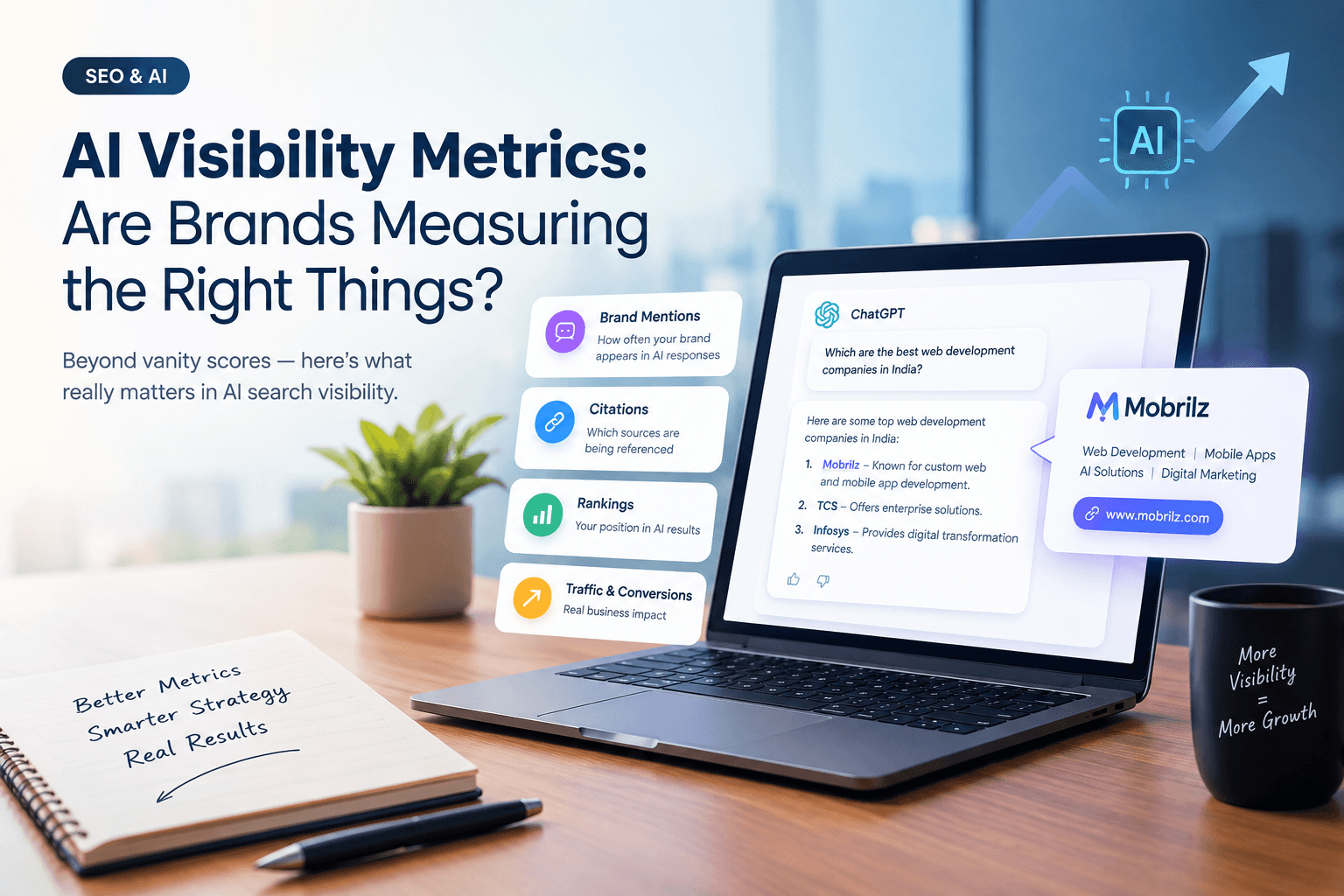
• Brand mentions
• Source citations
• Position or ranking within AI responses
• Frequency of appearance
• Competitor visibility
• Referral traffic
• Conversion-related outcomes
These metrics are useful, but they do not all represent the same thing.
For example, an AI system may mention a company without linking to its website. In another situation, the company's webpage may be cited as a source even though the brand itself is not directly mentioned.
This distinction is important when evaluating an AI SEO strategy.
One of the biggest mistakes businesses can make is treating every AI appearance as an identical visibility signal.
A brand mention means that the company's name appears in an AI-generated answer. A citation, on the other hand, generally means that a webpage is referenced or linked as a source.
These two signals can occur independently.
A company might be mentioned because an AI system already recognizes it as relevant to a topic, but the response may not provide a link to the company's website. Conversely, an article from a website could be cited as supporting information without the brand itself receiving prominent visibility.
Therefore, an effective AI visibility strategy should track mentions and citations separately instead of automatically combining them into one number.
This makes it easier to understand what is actually changing when an AI visibility score increases or decreases.
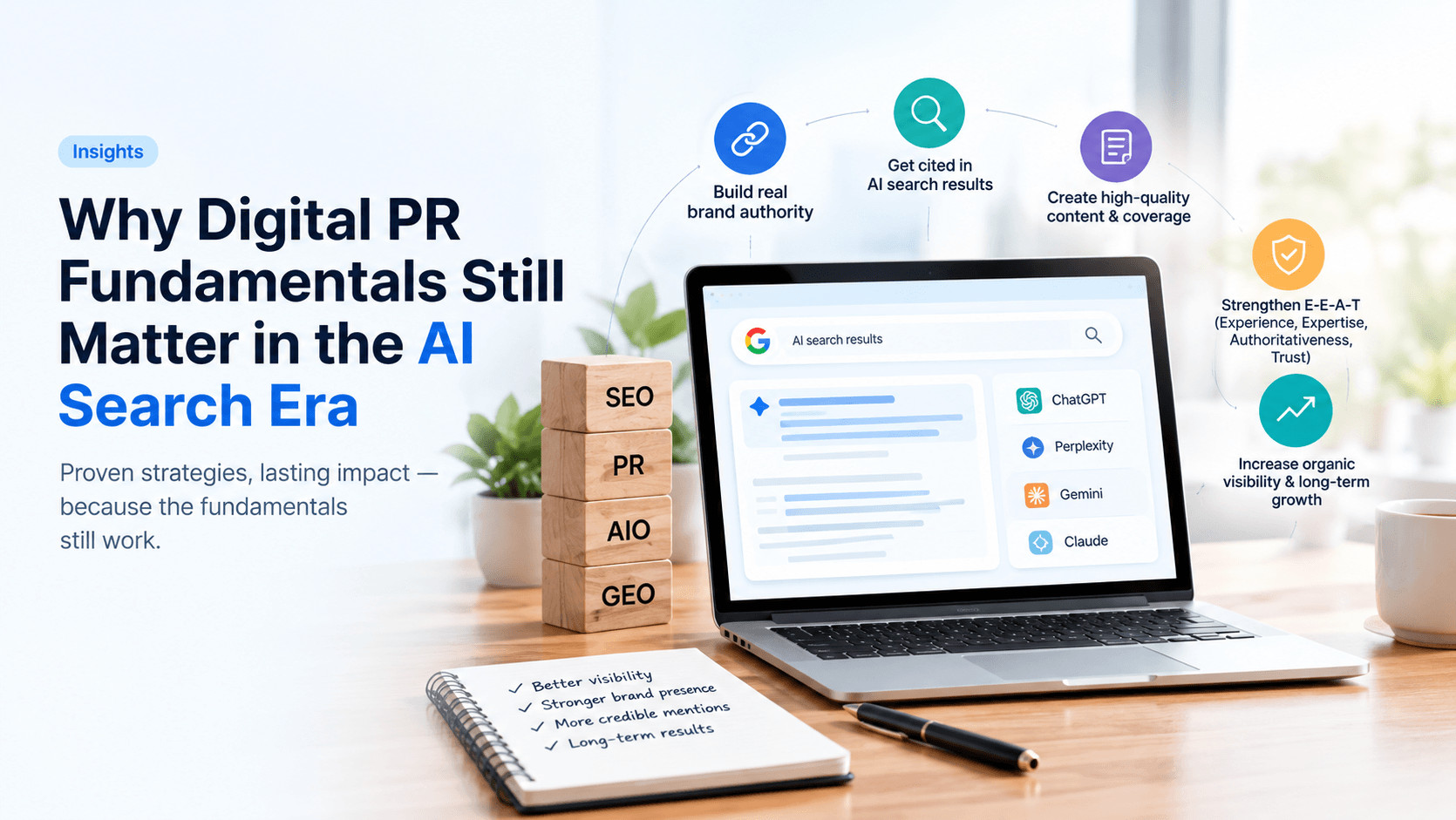
The growth of AI search does not mean traditional SEO has become irrelevant.
Research discussed by Search Engine Journal shows that a meaningful proportion of pages appearing as AI Overview sources also have visibility in Google's organic results. However, AI systems can also surface pages that do not rank highly for the exact original query.
This happens because AI systems can interpret a query, break it into related concepts, and retrieve information from pages that provide relevant coverage around those concepts.
That means businesses should not focus exclusively on one target keyword.
Instead, an effective AI SEO approach should build topical relevance by answering related questions, covering important subtopics, creating useful supporting content, and maintaining strong overall search visibility.
Traditional rankings and AI visibility should therefore be viewed as connected but separate performance areas.
Another important lesson is that correlation does not always mean causation.
For example, structured data and JSON-LD may appear frequently on pages that receive AI citations. However, simply adding schema markup does not automatically guarantee that a page will receive more citations.
This does not mean technical SEO is unimportant. Structured data can still help search engines understand content and entities. However, marketers should avoid assuming that one implementation automatically produces a measurable increase in AI visibility.
The same principle applies to other GEO (Generative Engine Optimization) activities.
Instead of implementing tactics simply because they are associated with AI search, businesses should measure whether those changes actually improve visibility, relevance, engagement, or business outcomes.
AI-generated responses are not always consistent.
The same prompt can potentially produce different answers depending on the model, context, timing, or other variables. As a result, a small increase or decrease in an AI visibility score does not necessarily indicate that a brand's overall market position has changed.
This is why marketers should avoid making major SEO decisions based on a limited number of prompts.
A better approach is to monitor a larger set of relevant queries over time and identify broader patterns.
For example, if a brand's mentions decrease, marketers can investigate:
• Which topics experienced the decline?
• Did competitors gain visibility?
• Did the change occur across multiple AI platforms?
• Are citations also declining?
• Did the tracked prompt set change?
• Are the same pages still being retrieved?
This type of analysis provides much more useful information than simply reporting that a visibility score went down.
The ultimate goal of AI search visibility should not simply be to collect more mentions.
A brand can appear frequently in AI-generated responses without generating meaningful website traffic or leads. Similarly, a website may receive citations while experiencing little measurable business impact.
That is why AI visibility should be connected with traditional performance data.
Businesses should monitor metrics such as:
• Organic impressions
• Organic rankings
• Website traffic
• AI referral traffic
• Engagement
• Leads
• Conversions
• Brand searches
• Competitor visibility
Search visibility is valuable, but it is only one part of the customer journey.
The real objective is to understand whether increased visibility helps users discover the brand, trust the brand, visit the website, and eventually take meaningful action.
A stronger measurement framework starts by separating different types of signals.
First, track brand mentions to understand how frequently your company appears in relevant AI responses.
Second, track citations to identify which pages and external sources AI systems use when generating answers.
Third, monitor traditional search rankings because organic visibility can still contribute to AI discovery.
Finally, connect these visibility signals with analytics and conversion data.
This creates a more complete picture of performance.
Rather than asking only, "What is our AI visibility score?", marketers should ask:
Where are we visible, why are we visible, what sources support that visibility, and is it producing meaningful results?
That shift from score-based reporting to outcome-based measurement can make AI SEO considerably more actionable.
AI search is still evolving, so the way brands measure visibility will continue to change.
New AI platforms, search interfaces, models, and answer formats will introduce new opportunities as well as new measurement challenges.
For businesses, the best approach is not to chase a single universal AI visibility score. Instead, they should develop a consistent measurement framework that combines mentions, citations, rankings, content relevance, traffic, and conversions.
AI visibility should ultimately be treated as a diagnostic signal rather than a standalone success metric.
Brands that combine AI search data with traditional SEO and real business performance will be better positioned to understand where their visibility is growing, where competitors are gaining ground, and where their content strategy needs improvement.
Businesses need more than a website to compete in today's search environment. They need a strong digital foundation that supports search visibility, user experience, performance, and long-term growth.
Mobrilz provides web development, mobile app development, digital marketing, AI solutions, and other technology services for businesses looking to strengthen their online presence. Its services include custom website development, mobile applications, AI-powered solutions, SEO, PPC, and social media marketing.
Mobrilz also works with technologies and solutions including Generative AI, Natural Language Processing, predictive analytics, AI-powered automation, and AI consulting. These capabilities can help businesses build technology platforms that are prepared for an increasingly AI-driven digital ecosystem.
As AI search, AI visibility, and GEO continue to evolve, businesses should focus on building useful content, technically sound websites, strong topical relevance, and measurable digital experiences rather than chasing visibility scores alone.
The brands that succeed will be the ones that measure not only where they appear in AI-generated answers, but also what that visibility means for real users and real business growth.
Updates
Oct 22, 2026
Read Article
News
Blog
Blog
Visit Us
E-160, 3rd Floor, Sector 63 Noida, U.P. 201301, India
Monday - Friday: 9:00 AM - 6:00 PM (IST)
Please schedule an appointment before visiting
Services
© 2026 Mobrilz. All rights reserved.
Made with❤️in India